Pablo’s cave
For Whom the Bell TollsPablo’s cave is both a refuge and a planning center in the mountain campaign. Within its shelter, Robert Jordan accepts responsibility for the bridge operation and turns the demolition into a practical plan, making the cave a crucial link between the guerrillas’ exposed mountain terrain and the mission they must carry out.
Setting and Role
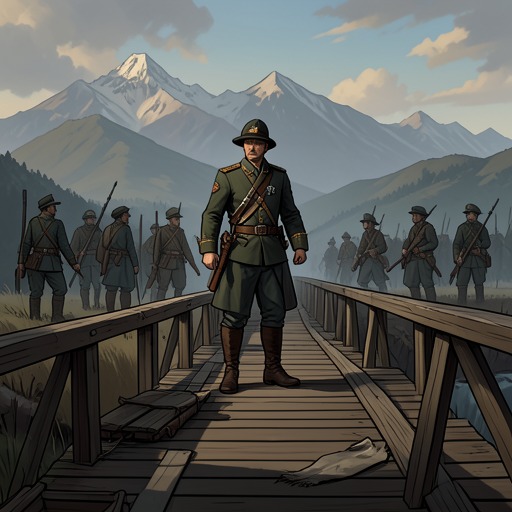
The cave lies within the mountain landscape of the pass, whose roads, slopes, stream, and bridge shape the guerrillas’ movements and military choices. The surrounding country is not simply a backdrop: weather and visibility affect observation, while the steep terrain governs access to the bridge and positions from which it can be assessed. The cave offers shelter when a storm drives the group indoors, providing a protected place to confer and work.
It also serves as a point of contact among the guerrillas. When Robert Jordan returns during the storm, Pilar tells him that El Sordo has gone to look for horses. The brief report connects the cave’s interior meeting to activity beyond it: the group’s plans depend on people moving through the surrounding mountains and securing what the operation requires.
Decisions and Preparation
The cave becomes the setting for Robert Jordan’s commitment to the demolition. With the others decided that the bridge should be destroyed, he says he is ready to do it and treats the assignment as a service he can perform. His decision turns the cave from a place of shelter into the headquarters of an operation whose success depends on technical preparation and cooperation.
At the table, Robert Jordan works through the bridge demolition in his notebook. He draws three sketches, works out the formulas, and marks the method in two clear drawings so Anselmo can complete the task if anything happens to him during the demolition. He then writes out the operation orders, completing two pages and reading them over carefully. The contingency plans reveal the practical stakes of the mission: the work must be understandable and executable even if its planner cannot carry it through himself.
People and Relationships
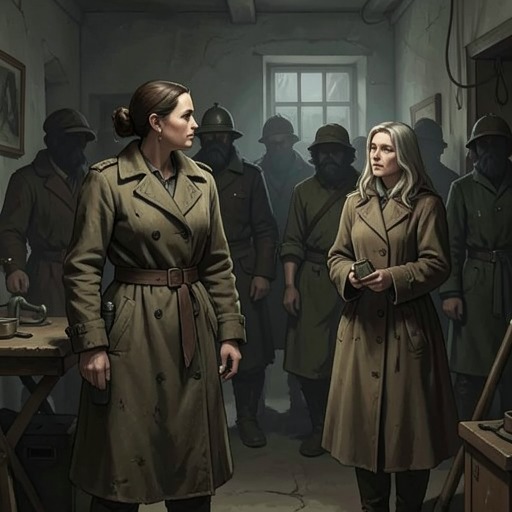
The cave brings together Robert Jordan, Pilar, Maria, Pablo, Anselmo, and the other members of the group, though they do not all occupy the same role in the planning. Pilar conveys information and helps manage the gathering; Robert Jordan works through the technical details while the others talk and play cards. Pablo is present across the table, a reminder that the mission is being prepared among people whose cooperation is necessary but not frictionless.
Maria sits beside Robert Jordan and watches him draw. When she places her hand on the table, he briefly lifts it to his face, then sets it down and returns to his work. The small gesture occurs amid the concentration and ordinary communal activity of the cave, placing their intimacy alongside, rather than outside, the demands of the operation.
Narrative Significance
The cave’s importance lies in how it joins shelter, collective decision, and military procedure. Outside, the storm limits movement; inside, Robert Jordan can translate the bridge’s physical structure into sketches, calculations, and orders. The contrast makes the space a temporary center of control in a campaign governed by terrain and uncertain circumstances.
That control remains provisional. Robert Jordan’s instructions explicitly prepare for the possibility that he will not be able to finish the demolition himself, and the group’s deliberation does not erase the risks of the task. Pablo’s cave therefore stands not as a secure base, but as the enclosed working space from which a fragile plan is made ready for the exposed landscape beyond.